
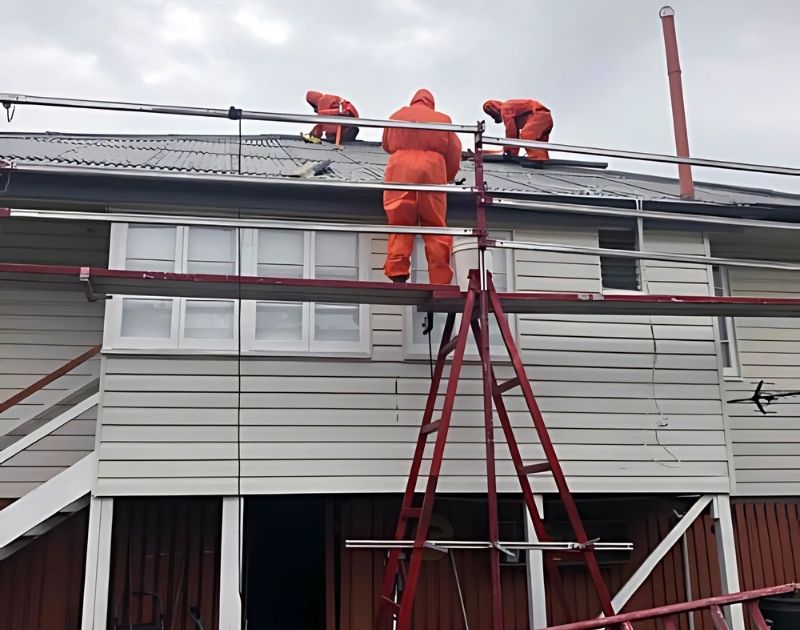
Renovating or demolishing an older property can be an exciting project, but it is important to consider what may be hidden behind walls, ceilings, floors and other building materials. In Brisbane and across Queensland, many homes and buildings constructed before the 1990s may contain asbestos products.
Asbestos was widely used because it was durable, heat resistant and affordable. While asbestos-containing materials can remain in good condition without causing an immediate problem, disturbing them during renovation or demolition can release hazardous fibres into the air.
Knowing what to look for and arranging the right asbestos inspection and testing checks before work begins can help protect homeowners, workers and anyone else who may be near the property.
Why asbestos can be a concern during renovation
Asbestos-containing materials are not always obvious. They can be incorporated into building products such as cement sheeting, roofing, eaves, wall linings, flooring materials and insulation.
A renovation may involve drilling, cutting, sanding, removing walls or replacing old roofing. These activities can damage materials that were previously undisturbed and potentially release asbestos fibres.
For this reason, identifying potential asbestos before starting work is an important part of preparing an older property for renovation.. Professional asbestos removal should be arranged when materials need to be safely removed.
Where asbestos may be found
Asbestos can occur in a wide range of materials, particularly in older homes. Depending on the age and construction of the property, it may be present in:
- Wall and ceiling sheeting
- Eaves and soffits
- Roofing materials
- Fencing
- Flooring and vinyl products
- Bathroom and laundry wall linings
- Exterior cladding
- Electrical switchboards
- Pipe or duct insulation
- Older sheds and garages
It is not possible to confirm whether a material contains asbestos simply by looking at it. Testing or assessment by a suitably qualified professional may be required when the material cannot be confidently identified.
Why demolition requires extra care
Demolition can disturb large amounts of building material in a short period. If asbestos is present, uncontrolled removal can spread fibres throughout the work area and surrounding environment.
Before demolition begins, potential asbestos-containing materials should be identified and dealt with appropriately. This helps prevent unexpected discoveries during the demolition process and reduces the risk of exposure.
Planning ahead can also make the project more efficient, as asbestos-related work can be arranged before the main demolition takes place.
What Queensland homeowners should consider in 2026
Queensland has specific requirements relating to asbestos identification, removal, handling and disposal. The requirements can depend on the type of material, the condition of the asbestos, the amount involved and the type of work being carried out.
Homeowners should not assume that asbestos can simply be removed with the rest of the building waste.
Where asbestos removal is required, the appropriate licensed professionals should be engaged for the work. Safe work procedures, suitable protective equipment, containment and correct disposal are important parts of the process.
For current requirements, homeowners should refer to guidance from Workplace Health and Safety Queensland or speak with a suitably qualified asbestos professional before commencing work.
Can homeowners remove asbestos themselves?
Some limited asbestos work may be permitted for homeowners under Queensland regulations, depending on the circumstances. However, asbestos removal can be hazardous if the material is damaged or handled incorrectly.
Attempting to identify, break, cut or remove suspect materials without the appropriate knowledge can increase the possibility of fibre release.
If you are unsure whether a building product contains asbestos, it is safer to stop work and seek professional advice rather than disturbing the material.
What happens during professional asbestos removal?
The exact process depends on the property and the type of asbestos involved. A professional service may begin by assessing the suspected material and determining the safest approach.
Depending on the project, the work may involve:
- Identifying suspected asbestos-containing materials.
- Assessing their condition and location.
- Establishing appropriate controls around the work area.
- Carefully removing the affected materials.
- Packaging and transporting asbestos waste appropriately.
- Cleaning the work area to minimise residual contamination.
- Completing any required clearance or documentation.
The goal is to control the risk from start to finish rather than simply removing a visible piece of material.
Don’t rely on the age of the property alone
A common misconception is that only very old houses contain asbestos. Although asbestos use was particularly common in earlier decades, the age and appearance of a building alone cannot confirm whether a particular product contains asbestos.
Renovations and extensions may also contain different generations of building materials, making professional assessment particularly useful when several parts of a property have been built or modified at different times.
Planning a Brisbane renovation?
If you are preparing to renovate, extend or demolish an older property, consider asbestos as part of your initial planning rather than waiting until work has started.
Finding potential asbestos early can help you understand what needs to be done, organise the appropriate professionals and reduce the chance of unexpected delays.
Most importantly, never disturb a material simply because you suspect it might be asbestos. Leave it undisturbed and obtain professional advice about the safest next step.
Get professional advice before work begins
Asbestos is a serious consideration for renovation and demolition projects, but proper planning can significantly reduce the risks associated with disturbing asbestos-containing materials.
If you are preparing an older Brisbane property for renovation or demolition and are concerned about possible asbestos, T&L Asbestos Removal can help you understand the appropriate next steps and arrange professional asbestos services where required.
Taking care of asbestos before renovation starts can help create a safer environment for everyone involved in your project.
Comments are closed